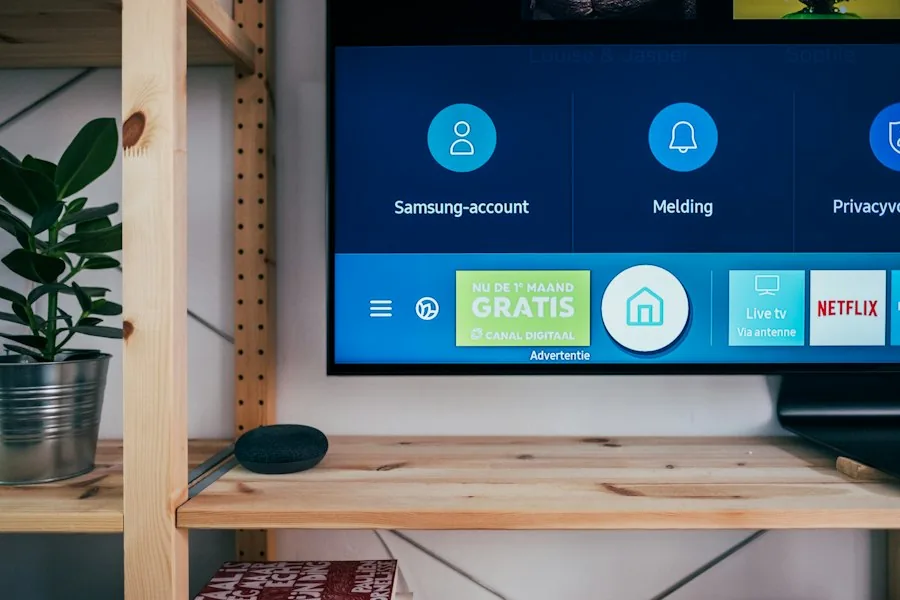
Explore How IPTV Works Australia to demystify internet protocol broadcasting. Learn how digital television signals are ingested, encoded into high-efficiency video packets, and distributed over national broadband networks straight to your smart screen.

Unlike legacy television networks that blast thousands of radio frequencies over terrestrial towers or orbital satellites, Internet Protocol Television operates on packetized data exchange. When you press a button on your remote control, your device requests a specific unicast stream from an edge content server.
The server answers by routing chunks of video packets through fiber backbones. Explore local broadband infrastructure specifications via NBN Co Australia and test your real-time packet transit latency using Speedtest by Ookla.
AusLiveTV utilizes local Australian point-of-presence servers to guarantee that high-bitrate AFL, NRL, and Premier League streams arrive with minimal jitter and zero packet loss.
Follow the complete journey of a live video feed from original studio capture to your television display.
High-grade broadcast capture cards receive raw SDI, satellite downlink, or master studio feeds in uncompressed format.
Dedicated GPU arrays compress raw video into bandwidth-friendly H.264 (AVC) and H.265 (HEVC) streams with 60fps smoothing.
Continuous video streams are segmented into micro-chunks (2 to 4 seconds each) using HTTP Live Streaming (HLS) protocols.
Video segments are cached instantaneously at Australian CDN points of presence in Sydney, Melbourne, and Brisbane to ensure local delivery.
Your media player (e.g., TiviMate or Smarters Pro) buffers upcoming micro-chunks into memory, decoding crystal-clear 4K picture on screen.
Discover the software standards that make reliable live broadcasting over consumer broadband possible.
Apple-developed HTTP Live Streaming adapts video resolution on the fly to match real-time connection fluctuations.
Standard transport stream containers designed for error resilience, preserving audio sync during packet jitter.
High-efficiency video coding cuts required bandwidth by 50% compared to legacy H.264, enabling crisp 4K over modest NBN lines.
Structured XML data delivery that feeds real-time television guide schedules, channel logos, and episode descriptions.
The physical distance between the broadcasting server and your home television directly determines channel change speeds and streaming stability. Overseas providers routing video through European or American datacenters introduce 250ms+ of ping latency, leading to buffering.
AusLiveTV maintains high-speed point-of-presence peering directly at Equinix and NextDC datacenters in Sydney and Melbourne. This local hosting drops packet ping times under 15ms for eastern seaboard viewers, producing instantaneous channel switching.
Whether streaming on an NBN 50 fixed-line or a Telstra 5G mobile connection, our adaptive stream distribution guarantees an uninterrupted stadium atmosphere in your home theater.
Common questions regarding internet television protocols, bandwidth requirements, and hardware.
Standard definition channels require just 5 Mbps, High Definition 1080p feeds need approximately 15 Mbps, and 4K Ultra HD streams run smoothly on 25 Mbps or faster NBN connections.
Some ISPs inspect DNS lookups or apply bandwidth throttling during peak sports hours. AusLiveTV streams run across secure encrypted ports, preventing ISP identification and traffic shaping.
Sign up for our complimentary 24-hour trial to evaluate stream bitrate, audio clarity, and instant channel switching directly on your home hardware.
Stream 10,000+ live HD channels, complete Australian sports telecasts, and 50,000+ on-demand movies.